
Sermorelin vs Tesamorelin: Complete Research Comparison Guide (2026)
By Analytical Peptides
Introduction: Sermorelin vs Tesamorelin
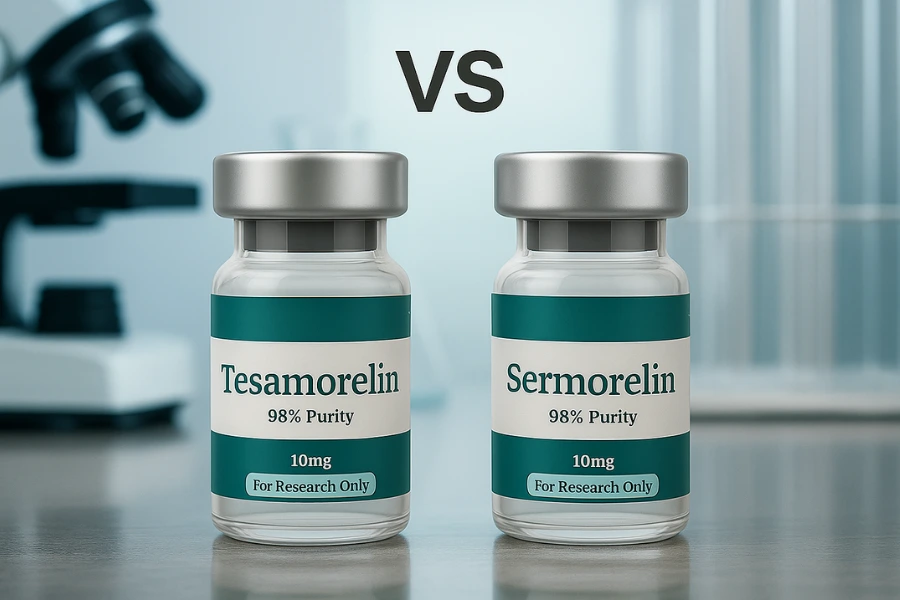
The comparison between Sermorelin and Tesamorelin is a key topic in peptide and endocrine research. Both compounds are growth hormone-releasing hormone (GHRH) analogs, yet they differ in structure, stability, and research applications.
As peptide science continues to evolve, researchers are increasingly exploring how these two compounds influence the growth hormone (GH) axis, including their effects on IGF-1 production, hormonal signaling, and metabolic pathways.
This guide provides a comprehensive breakdown of Sermorelin vs Tesamorelin, helping laboratories and researchers understand their differences and applications in controlled environments.
What is Sermorelin?
Sermorelin is a synthetic peptide consisting of the first 29 amino acids of natural GHRH. It is widely studied for its ability to stimulate the pituitary gland to release growth hormone in a pulsatile and natural manner.
Key Characteristics
- Short-acting peptide
- Mimics natural GH release patterns
- Rapid onset and clearance
Research Focus Areas
- Pulsatile GH secretion
- Pituitary responsiveness
- Age-related hormone decline models
- Short-duration endocrine studies
What is Tesamorelin?
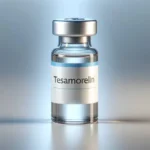
Tesamorelin is a modified GHRH analog designed for enhanced stability and resistance to enzymatic degradation. Compared to Sermorelin, it has a longer half-life and more sustained biological activity.
Key Characteristics
- Stabilized peptide structure
- Longer duration of action
- Enhanced GH and IGF-1 response
Research Focus Areas
- Sustained GH stimulation
- Metabolic and endocrine studies
- Hormonal regulation models
- Long-term peptide activity analysis
Sermorelin vs Tesamorelin: Mechanism of Action
Both peptides act on the GHRH receptors in the pituitary gland, but their duration and intensity differ.
Sermorelin Mechanism
- Stimulates natural GH pulses
- Short-lived activity
- Closely mimics physiological secretion
Tesamorelin Mechanism
- Prolonged receptor activation
- Sustained GH release
- Enhanced IGF-1 production
Key Differences Between Sermorelin and Tesamorelin
| Feature | Sermorelin | Tesamorelin |
|---|---|---|
| Type | GHRH analog (short-acting) | Modified GHRH analog |
| Half-life | Short | Longer |
| GH Release | Pulsatile | Sustained |
| Stability | Moderate | High |
| Research Focus | Natural GH rhythm | Extended GH stimulation |
Half-Life and Stability Comparison
A major difference in Sermorelin vs Tesamorelin is their stability:
- Sermorelin: Rapid degradation, short activity window
- Tesamorelin: Modified for resistance to breakdown, longer-lasting effects
This makes Tesamorelin more suitable for extended studies, while Sermorelin is ideal for short-term experiments.
Growth Hormone and IGF-1 Response
Both peptides influence the GH/IGF-1 axis, but with different profiles:
- Sermorelin: Produces natural GH pulses with moderate IGF-1 increases
- Tesamorelin: Leads to more sustained IGF-1 elevation
This distinction is important for research involving:
- Hormonal balance
- Metabolic regulation
- Tissue signaling pathways
Research Applications: Sermorelin
Buy TesamorelinSermorelin is commonly used in:
- Pituitary function studies
- Natural GH secretion models
- Short-term endocrine research
- Hormonal rhythm analysis
Research Applications: Tesamorelin
Tesamorelin is widely studied in:
- Long-term GH stimulation research
- Metabolic pathway studies
- Hormone regulation experiments
- Peptide stability analysis
Choosing Between Sermorelin and Tesamorelin
Choose Sermorelin if:
- You need natural GH pulse simulation
- You are studying pituitary responsiveness
- Your research requires short-duration activity
Choose Tesamorelin if:
- You need sustained GH release
- You are conducting long-term studies
- Stability and extended action are important
Why Researchers Compare Sermorelin and Tesamorelin
The comparison reflects broader trends in peptide development:
- Moving from natural analogs to enhanced synthetic peptides
- Increasing demand for longer-lasting compounds
- Focus on precision hormone modulation
Both peptides represent different stages in the evolution of GHRH-based research.
Peptide Research Trends in 2026
The peptide industry is advancing toward:
- Modified peptides with improved stability
- Long-acting hormone analogs
- Precision endocrine targeting
- High-purity research compounds
Analytical Peptides supports these advancements by providing lab-tested, research-grade peptides designed for modern scientific needs.
Quality Assurance in Peptide Research
For accurate and reproducible results:
- Use peptides with ≥99% purity (HPLC tested)
- Ensure third-party verification
- Maintain proper storage conditions (2–8°C)
- Source from trusted suppliers
Compliance and Disclaimer
All peptides mentioned, including Sermorelin and Tesamorelin, are:
- Intended strictly for research purposes only
- Not for human consumption
- Not for therapeutic or medical use
Always follow laboratory and regulatory guidelines.
Conclusion: Sermorelin vs Tesamorelin
The comparison between Sermorelin and Tesamorelin highlights two distinct approaches to growth hormone research:
- Sermorelin → Short-acting, natural GH pulse stimulation
- Tesamorelin → Long-acting, sustained GH release
Rather than competing, these peptides serve complementary roles depending on the research objective.