

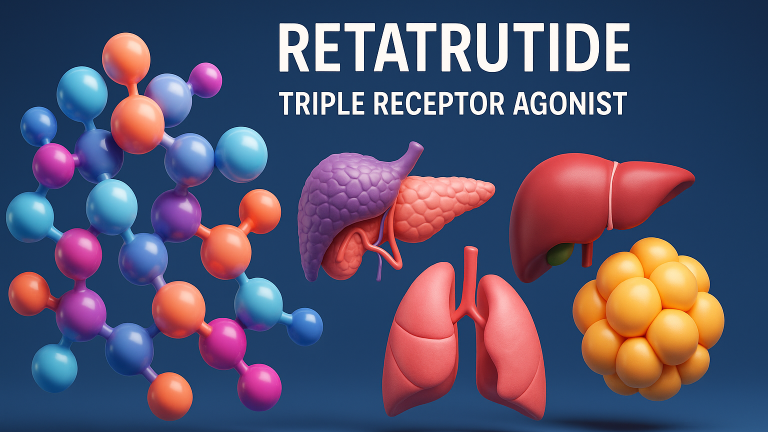
Retatrutide Triple Agonist: Complete Research Guide (2026)
What is Retatrutide Triple Agonist?
Retatrutide Triple Agonist is one of the most advanced peptides currently being explored in metabolic research. Unlike traditional single-target peptides, Retatrutide is designed to act on three key metabolic receptors simultaneously, making it a breakthrough in multi-pathway peptide science.
This unique mechanism has positioned Retatrutide as a next-generation research compound, attracting significant attention in studies related to energy balance, metabolic signaling, and endocrine regulation.
Understanding the Triple Agonist Mechanism
Retatrutide is classified as a triple receptor agonist, meaning it activates three important biological pathways:
- GLP-1 (Glucagon-Like Peptide-1) receptor
- GIP (Glucose-dependent insulinotropic polypeptide) receptor
- Glucagon receptor
Why This Matters
Most peptides target a single receptor. Retatrutide’s ability to engage multiple metabolic pathways at once allows researchers to study:
- Synergistic hormonal effects
- Complex metabolic interactions
- Multi-layered signaling systems
How Retatrutide Works in Research
Retatrutide’s mechanism is based on coordinated receptor activation, which can influence:
1. GLP-1 Pathway
- Regulates insulin secretion
- Influences appetite signaling
- Slows gastric emptying
2. GIP Pathway
- Enhances insulin response
- Supports nutrient metabolism
- Modulates energy storage
3. Glucagon Pathway
- Promotes energy expenditure
- Influences glucose production
- Supports metabolic balance
Key Features of Retatrutide Triple Agonist
- Multi-receptor activation
- Advanced peptide engineering
- High research relevance
- Broad metabolic application
- Long-acting biological effects
Retatrutide vs Traditional Peptides
| Feature | Retatrutide | Traditional Peptides |
|---|---|---|
| Receptor Targets | Triple | Single |
| Mechanism | Multi-pathway | Single pathway |
| Research Scope | Broad | Limited |
| Complexity | High | Moderate |
Research Applications of Retatrutide
Retatrutide is widely studied in:
- Advanced metabolic pathway research
- Energy balance and expenditure studies
- Hormonal signaling investigations
- Insulin and glucose regulation models
- Multi-receptor interaction analysis
Why Retatrutide is Considered Next-Generation
Retatrutide represents a major evolution in peptide science:
1. Multi-Pathway Approach
Instead of focusing on a single biological pathway, it integrates multiple systems for broader research insights.
2. Enhanced Efficiency
Simultaneous receptor activation allows researchers to study combined hormonal effects.
3. Innovative Design
Its structure reflects modern advancements in peptide engineering and metabolic targeting.
Retatrutide and Metabolic Research Trends (2026)
The rise of Retatrutide aligns with key industry trends:
- Shift toward multi-functional peptides
- Increased focus on metabolic disorders research
- Development of long-acting compounds
- Demand for precision hormone modulation
Retatrutide vs Other Incretin-Based Peptides
Compared to other peptides:
- Semaglutide → GLP-1 only
- Tirzepatide → GLP-1 + GIP
- Retatrutide → GLP-1 + GIP + Glucagon
This progression shows the evolution from single to dual to triple agonist peptides.
Advantages in Research Settings
Retatrutide offers several advantages:
- Broader data collection possibilities
- More comprehensive metabolic insights
- Reduced need for multiple compounds
- Enhanced experimental efficiency
Challenges and Considerations
Despite its benefits, Retatrutide also presents challenges:
- Increased complexity in data interpretation
- Multi-pathway interactions may require advanced analysis
- Requires precise dosing and controlled environments
Quality Assurance in Peptide Research
To ensure reliable results:
- Use ≥99% purity peptides (HPLC tested)
- Verify third-party lab reports
- Store properly (2–8°C recommended)
- Source from trusted suppliers like Analytical Peptides
Compliance and Disclaimer
All Retatrutide products are:
- Intended strictly for research purposes only
- Not for human consumption
- Not for medical or therapeutic use
Always follow laboratory safety and regulatory standards.
Future of Triple Agonist Peptides
Retatrutide represents the future of peptide research:
- More complex receptor targeting
- Greater metabolic precision
- Expanded research possibilities
As peptide science evolves, triple agonists are expected to play a major role in next-generation studies.
Conclusion: Retatrutide Triple Agonist
Retatrutide Triple Agonist stands at the forefront of modern peptide research, offering a multi-pathway approach that surpasses traditional compounds.
Its ability to activate GLP-1, GIP, and glucagon receptors simultaneously makes it a powerful tool for researchers exploring advanced metabolic systems.
For laboratories seeking cutting-edge compounds, Retatrutide represents a significant step forward in peptide innovation.