
The Evolution of Peptide Synthesis
Peptide synthesis has evolved from a highly manual laboratory process into a rapidly advancing field driven by automation, computational biology, and modern chemical engineering. Today, peptides are central to research in endocrinology, metabolic science, immunology, and molecular signaling.
At Analytical Peptides, understanding where peptide synthesis is heading is essential for anticipating how research compounds, production standards, and molecular design will evolve in the coming decade.
The future of peptide synthesis is defined by three major forces:
- Automation and robotics
- Artificial intelligence and computational design
- Sustainable and high-efficiency chemical methods
1. From Traditional Chemistry to Automated Synthesis
Solid-Phase Peptide Synthesis (SPPS) Evolution
Modern peptide production is largely based on Solid-Phase Peptide Synthesis (SPPS), a method that allows amino acids to be sequentially assembled into peptides on a solid resin.
While SPPS revolutionized peptide chemistry, the future lies in fully automated and highly optimized synthesis systems.
Key advancements include:
- Fully automated peptide synthesizers
- Real-time reaction monitoring
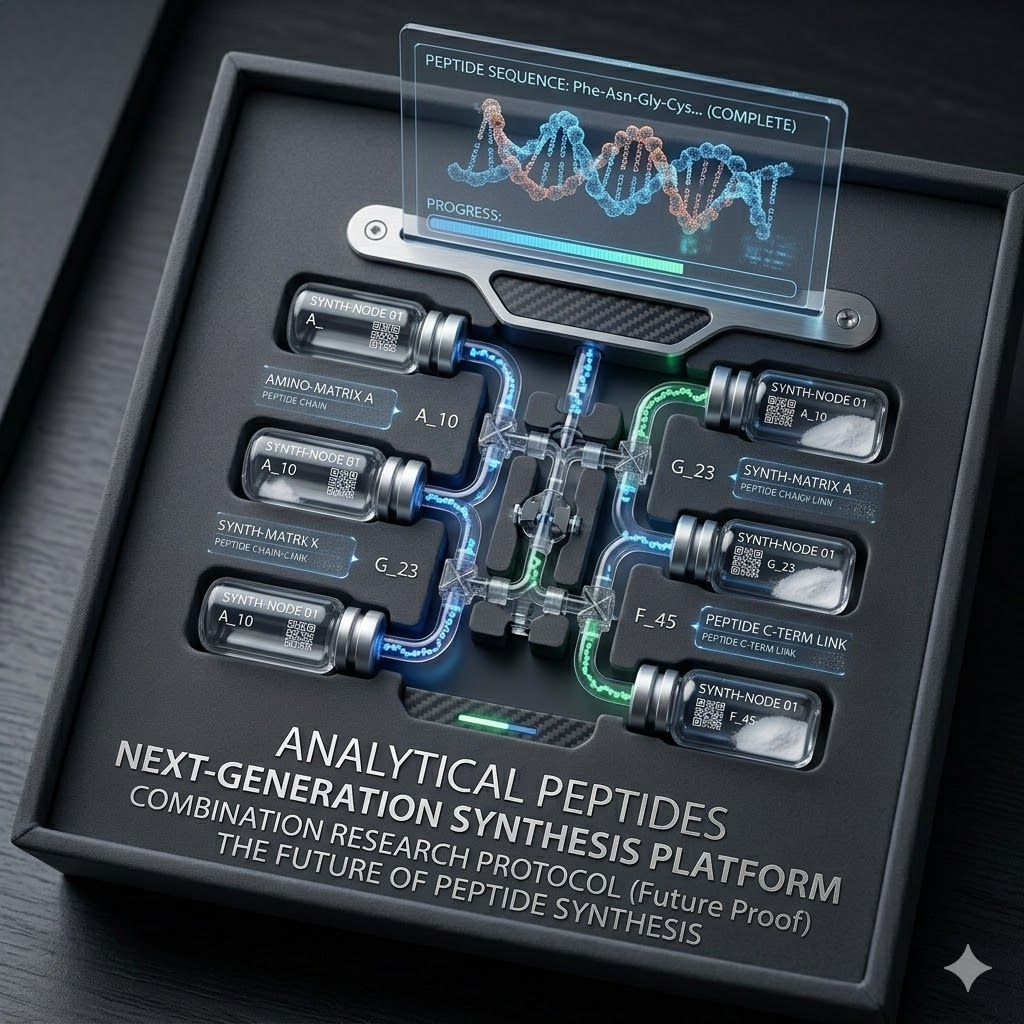
- Microfluidic synthesis platforms
- Reduced human intervention and error rates
Automation is increasing both speed and reproducibility, two critical factors in research-grade peptide production.
2. Artificial Intelligence in Peptide Design
One of the most transformative developments in modern peptide science is the integration of AI and machine learning.
AI systems are now being used to:
- Predict peptide structure-function relationships
- Optimize amino acid sequences for stability
- Model receptor binding affinity
- Reduce synthesis failures before laboratory production
Instead of trial-and-error chemistry, researchers are shifting toward computational peptide engineering.
Example AI-driven workflow:
Sequence→AI Model→Binding Prediction→Optimized Peptide
This reduces cost, increases efficiency, and improves the success rate of experimental peptide development.
3. Next-Generation Peptide Manufacturing Technologies
Microfluidic Synthesis Systems
Microfluidic systems are enabling:
- Faster reaction times
- Reduced reagent waste
- Highly controlled reaction environments
- Scalable laboratory-to-industrial production
These systems represent a shift toward precision chemistry at microscopic scale.
Cell-Free and Enzymatic Synthesis
Emerging methods include:
- Enzyme-driven peptide assembly
- Cell-free protein expression systems
- Biocatalytic peptide bond formation
These approaches reduce reliance on harsh chemical reagents and improve environmental sustainability.
The Future of Peptide Synthesis & Continuous Flow Chemistry
Unlike batch synthesis, continuous flow systems allow:
- Constant production of peptides
- Better heat and reaction control
- Increased scalability
- Improved product consistency
This is becoming a key industrial standard for peptide manufacturing.
4. The Rise of Green Peptide Chemistry
Sustainability is becoming a major driver in chemical research.
Future peptide synthesis will increasingly focus on:
- Reducing hazardous solvents
- Minimizing chemical waste
- Using recyclable resins
- Developing water-based synthesis systems
Green chemistry is not only environmentally responsible but also improves regulatory compliance and production efficiency.
5. High-Complexity and Designer Peptides
The future of peptide science is moving beyond simple linear sequences toward:
Cyclic peptides
- Increased stability
- Improved receptor binding
- Enhanced resistance to degradation
Stapled peptides
- Locked structural conformations
- Improved bioactivity
- Enhanced target specificity
Multi-functional peptide hybrids
- Peptide-drug conjugates
- Peptide-protein complexes
- Signal-modulating synthetic peptides
These innovations expand the potential applications of peptides in research and biotechnology.
6. Personalized and Precision Peptide Design
One of the most advanced future directions is personalized peptide engineering.
This involves:
- Genomic data integration
- Patient-specific receptor profiling
- AI-based molecular matching
- Custom-designed therapeutic peptides (in research contexts)
This approach aligns with the broader movement toward precision medicine and molecular customization.
7. Automation and Robotics in Peptide Labs
Future peptide laboratories will increasingly rely on:
- Robotic synthesis platforms
- Automated purification systems
- AI-driven quality control
- Real-time analytical monitoring
These systems reduce variability and allow researchers to focus more on design and analysis rather than manual synthesis.
8. Expanding Applications of Synthetic Peptides
As synthesis becomes more efficient, peptide applications are expanding into:
- Metabolic research (GLP-1, GIP, glucagon pathways)
- Neuroendocrine signaling studies
- Immunotherapy and vaccine development
- Regenerative medicine research
- Molecular diagnostics and biomarker detection
Peptides are becoming core tools in modern biomedical research.
9. The Integration of Computational Biology and Chemistry
The future of peptide synthesis is not purely chemical—it is computationally integrated.
Researchers now combine:
- Molecular dynamics simulations
- Protein folding prediction models
- AI-based receptor docking systems
- Quantum chemical modeling
This creates a digital-first approach to peptide discovery.
10. Challenges in Future Peptide Synthesis
Despite rapid innovation, several challenges remain:
- High cost of complex peptide production
- Stability issues in long-chain peptides
- Scale-up limitations for industrial synthesis
- Regulatory complexity in advanced bioactive compounds
Solving these challenges is a major focus of current research and development.
Conclusion: The Next Era of Peptide Science
The future of peptide synthesis is moving toward a highly advanced, integrated system combining:
- Automation
- Artificial intelligence
- Green chemistry
- Precision molecular design
- Scalable manufacturing technologies
At Analytical Peptides, this evolution represents more than just improved production—it represents a shift toward smarter, cleaner, and more predictive molecular science.
Peptides are no longer just laboratory compounds; they are becoming programmable biological tools engineered through computation and chemistry working together.