
7 Common Peptide Research Mistakes to Avoid in 2026 – A Technical Guide for Researchers
In 2026, peptide research has reached unprecedented levels of complexity. With the rise of highly specific GLP-1 agonists, GIP analogs, and custom-sequenced neuropeptides, the margin for error in the laboratory has narrowed. A single mistake in handling or design can lead to degraded samples, inconsistent data, and failed experiments.
Understanding the 7 Common Peptide Research Mistakes to Avoid in 2026 is vital for researchers embarking on complex peptide studies.
At Analytical Peptides, we provide the highest-grade research compounds, but their efficacy depends entirely on the researcher’s protocol. This guide outlines the seven most common mistakes currently affecting peptide research and how to avoid them to ensure reproducible, high-quality results.
1. Neglecting Sequence-Specific Reconstitution Protocols
One of the most frequent errors is treating all peptides as if they share the same solubility profile. Reconstituting a hydrophobic peptide in a purely aqueous buffer can lead to immediate aggregation or precipitation.
Recognizing these 7 Common Peptide Research Mistakes to Avoid in 2026 can significantly enhance your research outcomes.
Understanding the 7 Common Peptide Research Mistakes to Avoid in 2026 is crucial for achieving successful outcomes in your experiments.
- The Mistake: Using only bacteriostatic water or PBS for every peptide regardless of its amino acid composition.
- The Solution: Analyze the peptide’s hydrophobicity before reconstitution.
- Acidic Peptides: Often require a small amount of dilute acetic acid.
- Basic Peptides: May require dilute ammonia or a basic buffer.
- Hydrophobic Peptides: Often necessitate a drop of DMSO or DMF before slowly adding the aqueous carrier.
- Pro Tip: Always perform a “test” reconstitution with a microscopic amount of the lyophilizate before committing the entire vial.
2. Improper Storage and Thermal Cycling
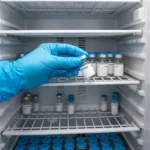
Peptides are inherently fragile. While lyophilized (freeze-dried) peptides are relatively stable at room temperature for short periods, their long-term integrity is highly sensitive to temperature fluctuations.
- The Mistake: Storing reconstituted peptides in a standard “auto-defrost” freezer.
- The Danger: Auto-defrost freezers cycle through temperature changes to prevent ice buildup. These cycles can cause repeated micro-thawing and refreezing, which shears the delicate peptide bonds.
- The Solution:
- Lyophilized: Store at $-20^{\circ}C$ or $-80^{\circ}C$ for long-term stability.
- Reconstituted: Use immediately or aliquot and store in a manual-defrost freezer. Avoid more than one freeze-thaw cycle.
3. Overlooking Net Peptide Content vs. Total Mass
A common point of confusion in 2026 research is the difference between “vial mass” and “net peptide content.”
By being aware of the 7 Common Peptide Research Mistakes to Avoid in 2026, researchers can save time and resources.
It’s important to know the 7 Common Peptide Research Mistakes to Avoid in 2026 when planning your experiments.
- The Mistake: Assuming a 5mg vial contains exactly 5mg of the active peptide sequence.
- The Reality: Lyophilized peptides contain counterions (like TFA or Acetate) and residual moisture. The Net Peptide Content is the actual percentage of the weight that is the peptide itself, usually ranging from $70\%$ to $90\%$.
- The Solution: Always factor in the net peptide content when calculating molarity for your experiments. If your protocol requires $1.0\ \mu M$ concentration, failing to account for a $20\%$ salt/moisture content will result in an under-dosed experiment.
4. Ignoring Air and Light Sensitivity
Certain amino acids are prone to oxidation and photo-degradation, yet many researchers fail to take protective measures during handling.
- The Mistake: Leaving vials of peptides containing Cysteine (C), Methionine (M), or Tryptophan (W) exposed to ambient light and oxygen.
- The Consequence: Oxidation of these residues can alter the folding, binding affinity, and biological activity of the compound.
- The Solution:
- Handle sensitive peptides under an inert gas (like Nitrogen or Argon) if possible.
- Store vials in amber-colored glass or wrap them in foil to block UV light.
5. Relying on Outdated Design without AI Modeling
With the integration of AI in 2026, relying solely on manual sequence design is becoming an “avoidable mistake.”
- The Mistake: Designing complex analogs without running them through predictive structural models.
- The Solution: Use computational tools to predict:
- Aggregation Propensity: Identifying sequences that will likely “clump” in solution.
- Proteolytic Stability: Predicting where enzymes will likely break the peptide chain.
- Analytical Peptides Perspective: We encourage researchers to use modern AI docking simulations to ensure the sequence being synthesized is optimized for its intended receptor target.
The 7 Common Peptide Research Mistakes to Avoid in 2026 should be at the forefront of every researcher’s mind.
6. Failure to Validate Purity via HPLC/MS
In a market with varying quality standards, assuming the label on the vial is $100\%$ accurate without verification is a gamble.
- The Mistake: Using research peptides without reviewing a batch-specific High-Performance Liquid Chromatography (HPLC) and Mass Spectrometry (MS) report.
- The Solution: Only source from providers like Analytical Peptides that provide transparent, third-party testing for every batch.
- HPLC: Confirms purity (percentage of the desired peptide vs. impurities).
- Mass Spec: Confirms identity (matching the molecular weight to the sequence).
7. Vigorous Agitation During Reconstitution
Peptides are not simple salts; they are structured biological tools.
- The Mistake: Shaking or vortexing a vial to speed up dissolution.
- The Consequence: The physical force of vortexing can cause “denaturation” or mechanical shearing of the peptide, especially in longer chains or fragile cyclic structures.
- The Solution: Gently swirl the vial or allow it to sit undisturbed for several minutes after adding the solvent. Patience preserves the molecular structure.
Conclusion: Elevating the Standard of Peptide Research
Avoiding these seven mistakes is the difference between breakthrough discovery and wasted resources. As we move through 2026, the integration of Precision Handling, AI Design, and Strict Storage Protocols will define the most successful research projects.
At Analytical Peptides, we are committed to providing the pure compounds necessary for this high-level work. By following these guidelines, you ensure that your research remains accurate, reproducible, and at the cutting edge of science.
Research Notice: All products mentioned are intended strictly for laboratory research purposes only. Not for human consumption or therapeutic use.
Understanding the 7 Common Peptide Research Mistakes to Avoid in 2026 can greatly enhance experimental design.
To ensure quality, remember the 7 Common Peptide Research Mistakes to Avoid in 2026.
To avoid pitfalls, focus on the 7 Common Peptide Research Mistakes to Avoid in 2026.
Awareness of the 7 Common Peptide Research Mistakes to Avoid in 2026 is crucial for success in peptide studies.
By recognizing the 7 Common Peptide Research Mistakes to Avoid in 2026, researchers can optimize their methodologies.
Referencing the 7 Common Peptide Research Mistakes to Avoid in 2026 can guide researchers towards better practices.