
HGH and Sermorelin in Peptide Research
In endocrine and peptide science, the growth hormone axis is one of the most extensively studied biological systems. Two commonly analyzed compounds in this system are:
- Human Growth Hormone (Somatropin) (HGH)
- Sermorelin
Although both influence growth hormone activity, they operate through fundamentally different biological mechanisms. HGH acts as a direct hormone, while Sermorelin functions as a growth hormone–releasing hormone (GHRH) analog that stimulates natural hormone production.
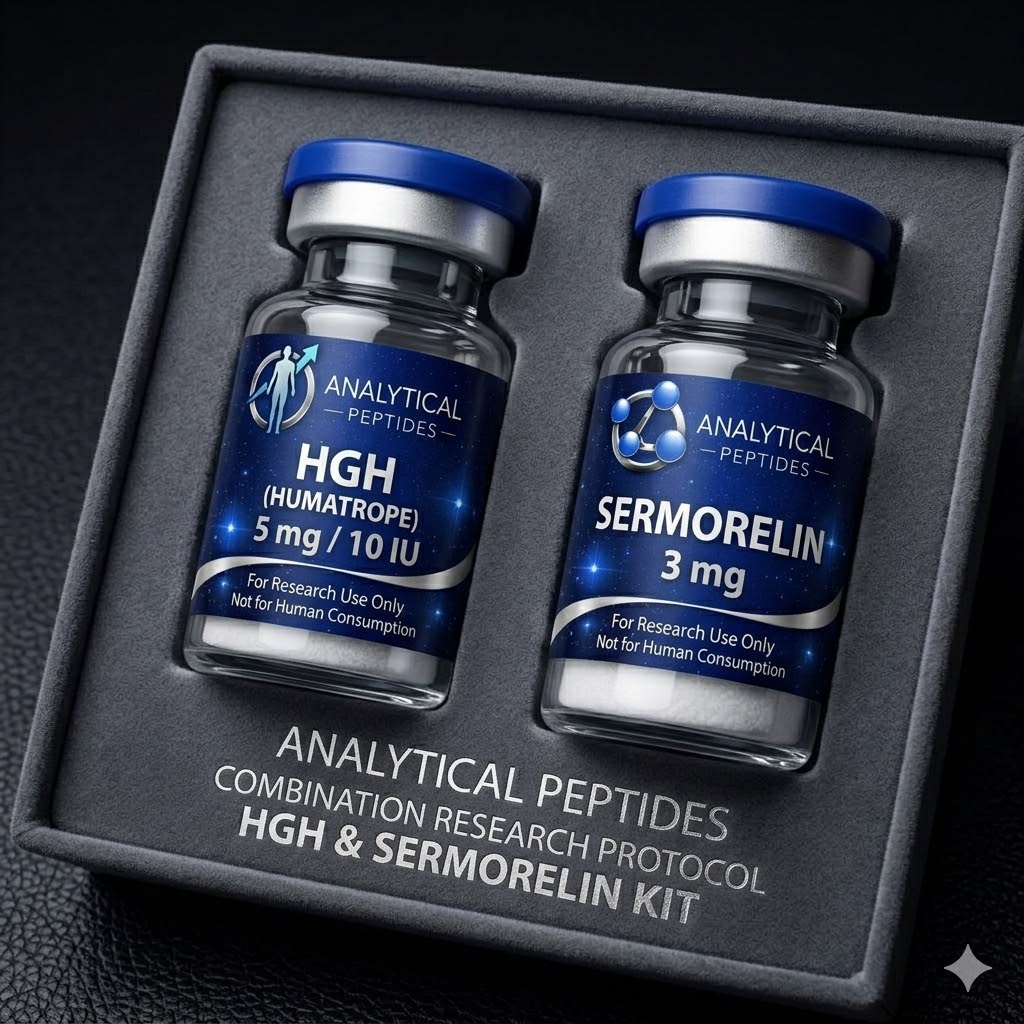
At Analytical Peptides, this comparison is presented strictly from a scientific and endocrine research perspective, focusing on receptor activity, signaling pathways, and physiological mechanisms.
Understanding HGH (Human Growth Hormone / Somatropin)
What is HGH?
Human Growth Hormone (HGH), also known as somatropin, is a peptide hormone naturally produced by the anterior pituitary gland. It plays a central role in growth regulation, metabolism, and cellular repair processes.
In research environments, HGH is studied as a direct-acting endocrine hormone that influences multiple organ systems simultaneously.
Biological Function of HGH
HGH acts systemically by binding directly to growth hormone receptors (GHR), leading to:
- Activation of IGF-1 (Insulin-like Growth Factor 1) production
- Regulation of protein synthesis pathways
- Modulation of lipid and glucose metabolism
- Stimulation of cellular growth and regeneration signaling
- Influence on tissue repair mechanisms
Its primary downstream mediator, IGF-1, is a key focus in metabolic and endocrine research.
Mechanism of Action of HGH
HGH binds directly to growth hormone receptors on target tissues, triggering:
- JAK2/STAT intracellular signaling cascade
- Gene transcription related to growth and metabolism
- Increased hepatic IGF-1 synthesis
- Systemic anabolic and metabolic signaling responses
This makes HGH a direct endocrine effector hormone, not a regulatory precursor.
Research Applications of HGH
In laboratory and endocrine studies, HGH is used to investigate:
- Growth hormone receptor signaling pathways
- IGF-1 axis regulation
- Protein synthesis and muscle metabolism
- Lipid and glucose metabolic pathways
- Endocrine feedback regulation of the pituitary axis
Understanding Sermorelin
What is Sermorelin?
Sermorelin is a synthetic peptide that mimics the first 29 amino acids of natural growth hormone–releasing hormone (GHRH). It is designed to stimulate the pituitary gland to release endogenous growth hormone.
Unlike HGH, Sermorelin does not act directly on peripheral tissues. Instead, it works upstream in the endocrine signaling cascade.
Biological Function of Sermorelin
Sermorelin acts on growth hormone–releasing hormone receptors (GHRH-R) in the anterior pituitary gland, leading to:
- Increased endogenous GH secretion
- Pulsatile growth hormone release patterns
- Secondary elevation of IGF-1 levels
- Preservation of hypothalamic-pituitary feedback regulation
This makes it a physiological regulator of hormone secretion.
Mechanism of Action of Sermorelin
The mechanism follows a natural endocrine pathway:
- Sermorelin binds to GHRH receptors in the pituitary
- Activates adenylate cyclase enzyme system
- Increases cyclic AMP (cAMP) levels
- Stimulates growth hormone release
- Promotes downstream IGF-1 production
Research Applications of Sermorelin
Sermorelin is widely used in scientific research for:
- Pituitary function analysis
- Growth hormone secretion rhythm studies
- Hypothalamic-pituitary axis modeling
- Endocrine feedback loop research
- IGF-1 signaling pathway evaluation
HGH vs Sermorelin: Core Scientific Differences
Although both compounds are involved in growth hormone regulation, they differ significantly in structure, function, and signaling behavior.
1. Type of Compound
- HGH → Direct peptide hormone
- Sermorelin → GHRH analog (hormone stimulator)
2. Mechanism of Action
- HGH: Directly binds to growth hormone receptors
- Sermorelin: Stimulates pituitary gland to release GH
3. Hormone Release Pattern
- HGH → External, steady exposure in research models
- Sermorelin → Natural pulsatile GH secretion
4. Endocrine Pathway Position
- HGH → Downstream effector hormone
- Sermorelin → Upstream regulatory peptide
5. IGF-1 Production
- HGH → Direct and immediate IGF-1 increase
- Sermorelin → Indirect IGF-1 elevation via natural GH release
6. Feedback System Interaction
- HGH → Can suppress natural GH production in feedback studies
- Sermorelin → Preserves natural hypothalamic-pituitary signaling
Comparison Table: HGH vs Sermorelin
| Feature | HGH (Somatropin) | Sermorelin |
|---|---|---|
| Type | Direct hormone | GHRH analog peptide |
| Action | Binds GH receptors directly | Stimulates GH release |
| GH Source | External supply | Endogenous production |
| IGF-1 effect | Immediate increase | Indirect increase |
| Hormone rhythm | Continuous exposure | Pulsatile release |
| Research focus | Metabolism, growth signaling | Endocrine regulation |
Endocrine System Impact in Research
HGH Pathway
HGH directly influences:
- Growth hormone receptor activation
- IGF-1 production in liver and tissues
- Protein synthesis pathways
- Glucose and lipid metabolism
It represents a direct anabolic signaling model.
Sermorelin Pathway
Sermorelin influences:
- Hypothalamic-pituitary communication
- Natural GH pulse regulation
- Endocrine feedback sensitivity
- Hormonal rhythm restoration
It represents a physiological hormone regulation model.
Molecular Signaling Comparison
cAMP Signaling Pathway
Sermorelin activates the upstream signaling cascade:
cAMP=ATPadenylate cyclasecAMP
This pathway is essential for growth hormone release in pituitary cells.
Downstream IGF-1 Pathway
Both HGH and Sermorelin ultimately influence IGF-1 signaling:
GH→IGF−1→cellular growth signaling
This pathway regulates growth, metabolism, and tissue signaling responses in research models.
Scientific Importance of HGH and Sermorelin
Both compounds are essential tools in growth hormone axis research, but they represent two different biological strategies:
HGH Model
Represents direct hormone replacement and receptor activation
Sermorelin Model
Represents natural endocrine stimulation and regulatory signaling
Together, they allow researchers to study:
- Direct vs indirect GH activation
- Continuous vs pulsatile hormone exposure
- Endocrine feedback system behavior
- IGF-1-mediated metabolic effects
Research Safety and Disclaimer
Human Growth Hormone (Somatropin) and Sermorelin are compounds studied extensively in endocrine and biochemical research.
This content is strictly for educational and scientific research purposes only. It does not provide medical advice, treatment guidance, or usage instructions.
All research involving peptide and hormone compounds should be conducted under appropriate laboratory and regulatory standards.
Conclusion
The comparison between HGH and Sermorelin highlights two distinct mechanisms within the growth hormone axis:
- Human Growth Hormone (Somatropin) acts as a direct endocrine hormone affecting tissues immediately.
- Sermorelin functions as an upstream regulator, stimulating natural hormone release through the pituitary gland.
At Analytical Peptides, understanding both mechanisms is essential for advancing research in endocrine signaling, metabolic regulation, and peptide science.