
Retatrutide vs HGH: A Complete Scientific Comparison (2026 Guide)
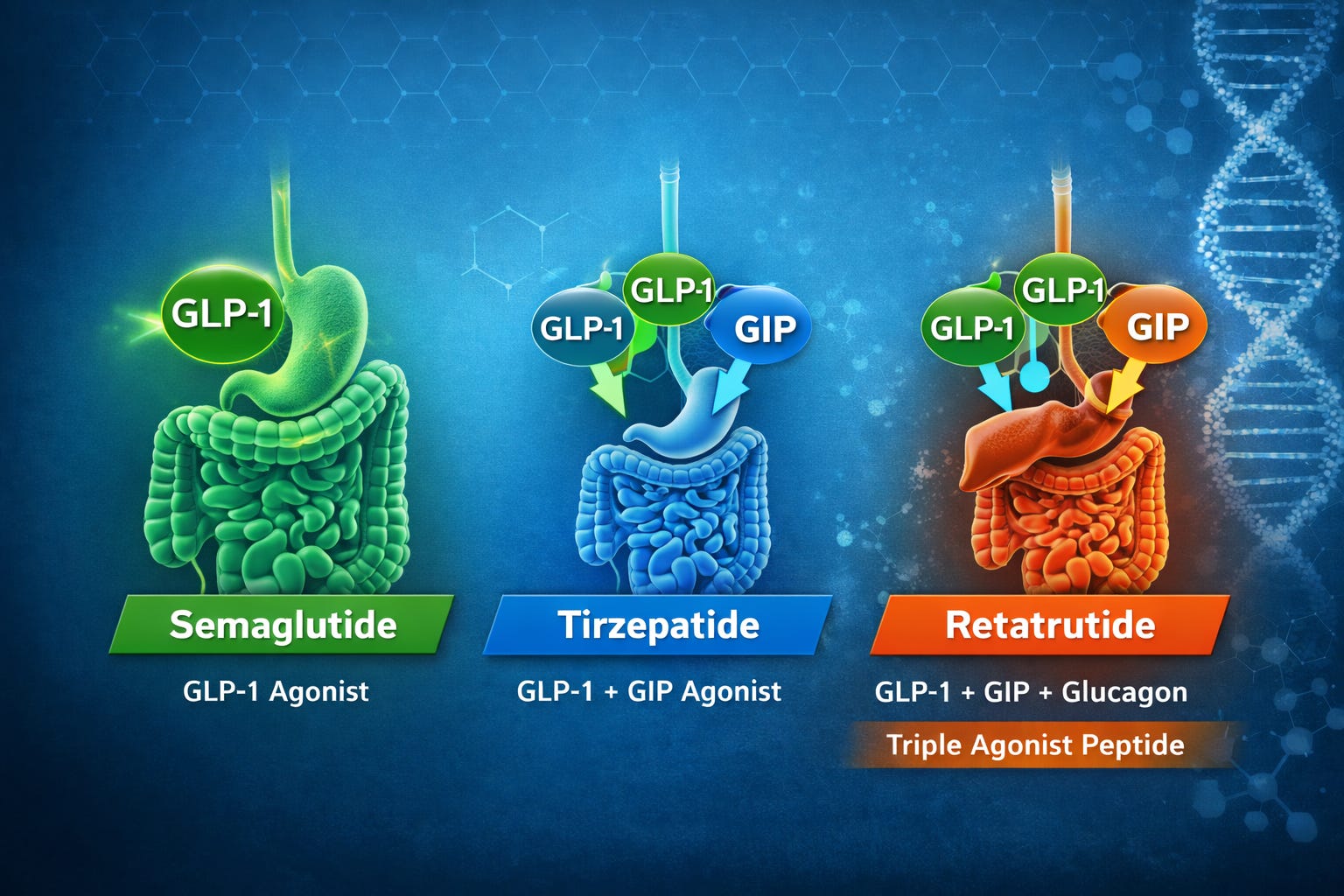
Analyzing Retatrutide vs HGH provides a fascinating look at different pathways for metabolic optimization. While Retatrutide acts as a triple agonist, HGH focuses on direct cellular growth and repair. Our Retatrutide Weight Loss Research highlights the revolutionary nature of these new compounds.
Introduction: Understanding Retatrutide vs HGH
The comparison between Retatrutide vs HGH (Human Growth Hormone) has become one of the most searched topics in modern peptide and metabolic research. As scientific interest grows around next-generation peptides and hormonal therapies, researchers and laboratories are increasingly examining how these compounds differ in mechanism, application, and biological impact.
While HGH has been widely studied for decades, newer compounds like Retatrutide represent a significant shift toward multi-pathway metabolic modulation. Understanding the differences between these two is essential for anyone exploring peptide research, metabolic pathways, or endocrine system studies.
What is Retatrutide?
Retatrutide is a triple receptor agonist peptide currently being studied for its effects on metabolic regulation. It interacts with:
- GLP-1 (Glucagon-like peptide-1)
- GIP (Glucose-dependent insulinotropic polypeptide)
- Glucagon receptors
This multi-target mechanism makes Retatrutide unique compared to traditional single-pathway peptides.
Key Research Areas
- Metabolic signaling pathways
- Energy expenditure regulation
- Appetite and satiety signaling
- Glucose metabolism
Its ability to target multiple receptors simultaneously is why Retatrutide is often described as a next-generation metabolic peptide.
What is HGH (Human Growth Hormone)?
Human Growth Hormone (HGH), also known as somatotropin, is a naturally occurring hormone produced by the pituitary gland. It plays a central role in:
- Growth and development
- Cell regeneration
- Protein synthesis
- Hormonal balance
In research environments, HGH is often studied for its influence on IGF-1 production, which is a key mediator of many growth-related processes.
Retatrutide vs HGH: Mechanism of Action
Retatrutide Mechanism
Retatrutide works through multi-receptor activation, influencing:
- Insulin secretion
- Appetite regulation
- Energy balance
This makes it particularly relevant in metabolic and obesity-related research.
HGH Mechanism
HGH operates through:
- Stimulation of IGF-1 production
- Direct anabolic effects
- Tissue growth and repair signaling
Unlike Retatrutide, HGH acts primarily through the endocrine growth axis.
Key Differences Between Retatrutide and HGH
| Feature | Retatrutide | HGH |
|---|---|---|
| Type | Peptide (Triple Agonist) | Hormone |
| Main Focus | Metabolic regulation | Growth & repair |
| Mechanism | GLP-1, GIP, Glucagon receptors | IGF-1 stimulation |
| Research Use | Obesity, metabolism | Growth, recovery |
| Pathways | Multi-pathway | Single primary axis |
Scientific Research Applications
Retatrutide Research Applications
- Advanced metabolic studies
- Obesity and weight regulation research
- Hormonal signaling pathways
- Insulin sensitivity studies
HGH Research Applications
- Growth hormone deficiency models
- Muscle and tissue regeneration studies
- Aging and endocrine research
- Bone density research
Why Retatrutide is Gaining Attention
The growing interest in Retatrutide comes from its multi-functional design. Unlike traditional peptides, it does not rely on a single biological pathway. Instead, it:
- Combines multiple metabolic signals
- Offers broader research potential
- Demonstrates synergistic biological effects
This positions it as a cutting-edge compound in peptide science.
HGH: A Long-Standing Research Standard
Despite newer compounds emerging, HGH remains a gold standard in hormonal research due to:
- Extensive clinical data
- Well-understood mechanisms
- Broad research applications
Its reliability continues to make it essential in laboratory studies.
Retatrutide vs HGH for Metabolic Research
When comparing Retatrutide vs HGH in metabolic studies, the key distinction is:
- Retatrutide → Direct metabolic regulation
- HGH → Indirect metabolic influence via growth pathways
This makes Retatrutide more targeted for energy balance research, while HGH is broader in scope.
Peptide Research Trends in 2026
The peptide industry is rapidly evolving, with trends focusing on:
- Multi-target peptides (like Retatrutide)
- Precision metabolic compounds
- Advanced hormone analogs
- Research-grade purity standards
Websites like Analytical Peptides are at the forefront of supplying high-quality research compounds that meet these evolving demands.
Choosing Between Retatrutide and HGH in Research
The choice depends on research goals:
- Use Retatrutide for metabolic and energy-related studies
- Use HGH for growth, regeneration, and endocrine research
Each compound serves a distinct scientific purpose, and neither is a direct replacement for the other.
Conclusion: Retatrutide vs HGH
The comparison of Retatrutide vs HGH highlights a clear shift in peptide science:
- HGH represents traditional, well-established research pathways
- Retatrutide represents innovative, multi-target metabolic research
Both play important roles in advancing scientific understanding, and their differences make them complementary rather than competitive in many research settings.